Ever found a blog or website that is too good to be true? I have found this blog to be a very interesting blog, worthy of much attention. The posts are meaty and informative. So while I am being a little tardy in writing in my own blog, you can enjoy the very informative and interesting blog posts in this blog.
The specific article that I wish to highlight is one on the absolutely amazing spitting cobras. This post will intrigue you, 100 % guaranteed or your money back.

Monday, April 27, 2015


Thursday, April 23, 2015
What Is In the Works.

It has been too long since I last wrote for this blog but I am slowly preparing future posts. One will be about one the most important figures in dinosaur paleontology and another will be about an armored
fish that had one of the most powerful bites in the animal kingdom.
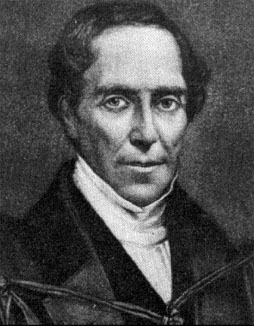 |
| A future post will be about this guy... |
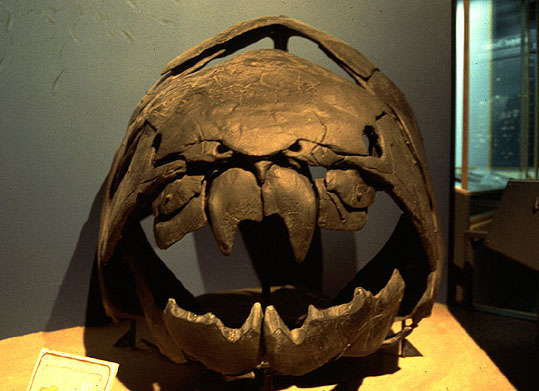 |
| and this guy. |
Tuesday, April 7, 2015
Artist Highlight: Raul Martin
 |
| The giant crocodylian Dienosuchus attacking a tyrannosaur. |
Raul Martins interpretation of dinosaurs, I think, has not been matched by many artists, as far as behavior and anatomy. His dinosaurs are balanced, lack any outlandish coloration and soft tissue add-ons. Their behavior is realistic and not fanciful. I am sure that the soft-tissue of dinosaurs could have been extreme and that their behavior could have been interesting to say the least but often, from what I have seen of some paleo-artists, sometimes the animals just are a little odd and outlandish to me.
To be honest, I really don't know anymore than that about Raul Martin. I have been unable to find any good biography about him anywhere. Here is his website, enjoy
 |
| This was done with pencil! |
Wednesday, April 1, 2015
Mosasaurs: Serpents of the Sea. W.P.A Post #2
After writing the last post for the Why Paleontology is Awesome series I had a bit of a dilemma. I just could not get away from pterosaurs!!! Now, that really isn't much of a problem but I needed to pick a different topic for the next post in the series. I really do not want to have a long string of pterosaur posts but they are just SO COOL! I have come to the singular conclusion that there is no such thing as a "normal" pterosaur. They all are unique and bizarre.
 But I have forced myself away from the leathery-winged areo-beasts and will now be writing about everyone's favorite sea-monster (other than sharks)- the Mosasaurs.
Mosasaurs were serpentine reptiles that once inhabited the oceans worldwide. They came in many sizes and just as many varieties. They are known from every continent on the earth including Antarctica. They also were some of the very first fossil reptiles that were brought to scientific attention. Their fossils were found and described before the first dinosaur (Megalosaurus) was. It was originally thought to be a whale or a crocodile until some of the biggest names in paleontology at the time affirmed it to be a animal previously unknown some years later. The mosasaur was christened Mosasaurus hoffmanii meaning meuse-river reptile, after a local river, and was given the species name after the doctor that first gave interest in the animal. Mosasaurs were found by Lewis and Clark during their exploration of the west while trekking through Kansas. Other mosasaurs were found during other explorations of the West, including one by the German prince Maximilian von wien.
A lot has happened since the first mosasaurs were discovered. Several new species of mosasaur have been found since, many from around the globe. Many finds including well preserved soft-tissue such their wind pipe, skin, even internal organs and remnants of waste from the intestinal tract!
They fed on just about anything in the sea. Their meals included fish, mollusks, sharks, plesiosaurs, pterosaurs, birds, and other mosasaurs, so basically everything around them. Their style of eating might have been somewhat unique. Certain parts of their jaws were unfused and allowed disconnection. This would have allowed mosasaurs to eat food material larger than their heads. It is possible that after capturing their prey they would have arranged the food matter head first towards their stomach. They would then push it into their throat with their lower jaws, their lower jaws flexing at certain areas to allow this to happen. When the lower jaw was flexed as far is it could, the mosasaur's pterygoid teeth would
"catch" the food to keep it from escaping out of the mouth. It would then return its lower jaw to its natural position and repeat. I personally think that they would have incorporated a wide range of feeding behavior but may have incorporated the above method as its default method.
Mosasaurs hunting style has been traditionally viewed as an ambush predator that would be limited to short bursts being inefficient at long-distance pursuits. Well, one thing that I have learned about paleobiology is this: Whenever scientist limit an animal because it probably wasn't well designed for whatever, they turn out to be wrong. Tyrannosaurus rex is a good example of this. There was a time when it was popular to say that T. rex was an obligatory scavenger, like a modern-day vulture. Of course, today that idea is no longer seriously considered. It has since become apparent that T. rex was an active hunter. Also, we learned last W.P.A. post that pterosaurs were not as weak and helpless as once thought. Well mosasaurs are no exception. Recent finds and studies, such as this one and this one, have shown that mosasaurs may have been better sustained swimmers after all.
Some of the features that would have allowed them to be good, long-distance swimmers would have included scales that would have encourage better aerodynamics (for some reason I do not think that is the right word), bundles of fiber that would have been under the epidermis that would have kept the skin from folding when bending which would thus reduce drag, and a dorsal vertebrae column, or the back, that was rigid while the tail was the main source for propulsive thrust. Some have even suggested that certain species of mosasaurs would have swam like a plesiosaur or penguin, utilizing underwater flight for better maneuverability in weedy enviroments. I am not too sure of that hypothesis but it is worth looking into. All of this paints a rather fearsome picture of a very well-designed aquatic predator.
But just when you thought that the rivers would have been safe (although, with crocodiles the size of school buses swimming all around you probably would not have come to that conclusion), there were mosasaurs that seemed to enjoy freshwater. Mosasaurs seem to have been just about everywhere, from Antarctica to the Arctic, N. America to Australia and even in your lakes as well.
Now when I say that mosasaurs would have eaten everything, I meant just that. There were some
varieties that snacked on hard-shelled mollusks, like clams and muscles, ammonites, and even turtles. An example of that is Globidens. As evident by their name, their teeth were globular, perfect for crushing the hard shells. Stomach contents have even been found from Globidens shows that Globidens did in fact eat animals that were covered by hard shells. It was a large animal, attaining lengths of around 20 feet (~ 7m) long. Other mosasaurs like Globidens have been found, some did not have such extreme dentition, while others were just as unusual.
Mosasaurs were not social creatures at all! The fossils found with mosasaur in association with one another are either a "gravid" or, by more familiar terms but scientifically inaccurate, pregnant mother or a mosasaur is the stomach contents of another. So in other words, mosasaurs got together either for reproduction or to eat one another. Friendly animals, no doubt. Michael Everhart in Oceans of Kansas writes a list of all the mosasaurs that he is aware of (and he is aware of a lot of mosasaurs!) that were found together and they are examples of either babies prior to birth or one mosasaur ate the other one.
Mosasaurs gave birth to live young in a similar manner to snakes today. Sometimes you will see illustration of a mosasaur crawling on the beach to lay eggs like sea-turtles do but that is contrary to what we know about mosasaurs. They definitely gave birth to live young like many marine reptiles did in the past. It seems like that for many marine reptiles it was very common for them to give birth to live young instead of the typical reptilian mode of reproduction, namely laying eggs. Mosasaurs most likely would not have had any parental inclinations however. There are no reptiles today that do other than crocodilians which will often bring their babies to water and protect them. After a while though, those babies are on their own and if they were not careful, they may have become lunch for mother.
One topic that I have not found anybody to be interested in, or at least from what I can find, concerning mosasaurs, except for a very brief reference in a fictitious story, is that of their metabolic physiology. Were mosasaurs warm-blooded or cold-blooded? I have not really formulated an opinion myself except to assume for now that they were cold-blooded. Reptiles are, for the most part, ectothermic or in other words, cold-blooded. It is probably on the safe side to assume that of mosasaurs until the evidence proves otherwise.
Sharks are all ectothermic and yet the live an active life-style in the ocean. The physical demands for living in the weightless environment of water is significantly less than that on land. Being relatively active in the water is possible for sustained periods while running on anaerobic power, especially if you are as aerodynamic as a shark or a mosasaur. But I will not be conclusive in such conclusions until I can do more research on the subject.
Well, hopefully you have an appreciation for mosasaurs after this article. The work that goes into understanding something that is interesting is very rewarding and how much more it is when you study something AWESOME... like a mosasaur. Mosasaurs were truly very amazing beasts that demand our attention beyond what they may get this June...
.jpg)
 But I have forced myself away from the leathery-winged areo-beasts and will now be writing about everyone's favorite sea-monster (other than sharks)- the Mosasaurs.
Mosasaurs were serpentine reptiles that once inhabited the oceans worldwide. They came in many sizes and just as many varieties. They are known from every continent on the earth including Antarctica. They also were some of the very first fossil reptiles that were brought to scientific attention. Their fossils were found and described before the first dinosaur (Megalosaurus) was. It was originally thought to be a whale or a crocodile until some of the biggest names in paleontology at the time affirmed it to be a animal previously unknown some years later. The mosasaur was christened Mosasaurus hoffmanii meaning meuse-river reptile, after a local river, and was given the species name after the doctor that first gave interest in the animal. Mosasaurs were found by Lewis and Clark during their exploration of the west while trekking through Kansas. Other mosasaurs were found during other explorations of the West, including one by the German prince Maximilian von wien.
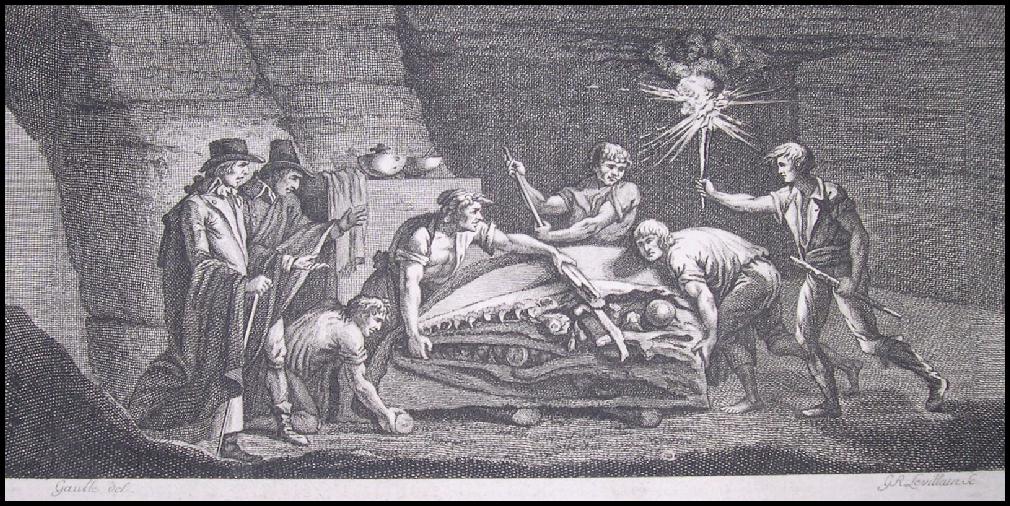 |
| An engraving of the first mosasaur found. |
Mosasaurs were apex predators in the oceans that they thrived in. The rock layers that contain mosasaurs contain few to no other large carnivores suggesting mosasaur dominance wherever they went. They reached sizes few other predatory animals have reached, the largest mosasaur being up to 17m (~55 feet) long!
 |
| Mosasaur skin impression. |
"catch" the food to keep it from escaping out of the mouth. It would then return its lower jaw to its natural position and repeat. I personally think that they would have incorporated a wide range of feeding behavior but may have incorporated the above method as its default method.
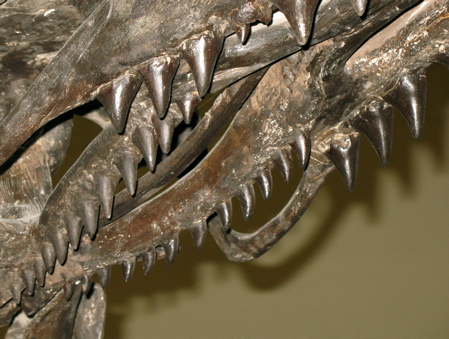 |
| Pterygoid teeth of a mosasaur |
Some of the features that would have allowed them to be good, long-distance swimmers would have included scales that would have encourage better aerodynamics (for some reason I do not think that is the right word), bundles of fiber that would have been under the epidermis that would have kept the skin from folding when bending which would thus reduce drag, and a dorsal vertebrae column, or the back, that was rigid while the tail was the main source for propulsive thrust. Some have even suggested that certain species of mosasaurs would have swam like a plesiosaur or penguin, utilizing underwater flight for better maneuverability in weedy enviroments. I am not too sure of that hypothesis but it is worth looking into. All of this paints a rather fearsome picture of a very well-designed aquatic predator.
But just when you thought that the rivers would have been safe (although, with crocodiles the size of school buses swimming all around you probably would not have come to that conclusion), there were mosasaurs that seemed to enjoy freshwater. Mosasaurs seem to have been just about everywhere, from Antarctica to the Arctic, N. America to Australia and even in your lakes as well.
Now when I say that mosasaurs would have eaten everything, I meant just that. There were some
 |
| Globidens dakotensis |
Mosasaurs were not social creatures at all! The fossils found with mosasaur in association with one another are either a "gravid" or, by more familiar terms but scientifically inaccurate, pregnant mother or a mosasaur is the stomach contents of another. So in other words, mosasaurs got together either for reproduction or to eat one another. Friendly animals, no doubt. Michael Everhart in Oceans of Kansas writes a list of all the mosasaurs that he is aware of (and he is aware of a lot of mosasaurs!) that were found together and they are examples of either babies prior to birth or one mosasaur ate the other one.
Mosasaurs gave birth to live young in a similar manner to snakes today. Sometimes you will see illustration of a mosasaur crawling on the beach to lay eggs like sea-turtles do but that is contrary to what we know about mosasaurs. They definitely gave birth to live young like many marine reptiles did in the past. It seems like that for many marine reptiles it was very common for them to give birth to live young instead of the typical reptilian mode of reproduction, namely laying eggs. Mosasaurs most likely would not have had any parental inclinations however. There are no reptiles today that do other than crocodilians which will often bring their babies to water and protect them. After a while though, those babies are on their own and if they were not careful, they may have become lunch for mother.
 |
| Mosasaur species found in the Midwest U.S.A |
One topic that I have not found anybody to be interested in, or at least from what I can find, concerning mosasaurs, except for a very brief reference in a fictitious story, is that of their metabolic physiology. Were mosasaurs warm-blooded or cold-blooded? I have not really formulated an opinion myself except to assume for now that they were cold-blooded. Reptiles are, for the most part, ectothermic or in other words, cold-blooded. It is probably on the safe side to assume that of mosasaurs until the evidence proves otherwise.
Sharks are all ectothermic and yet the live an active life-style in the ocean. The physical demands for living in the weightless environment of water is significantly less than that on land. Being relatively active in the water is possible for sustained periods while running on anaerobic power, especially if you are as aerodynamic as a shark or a mosasaur. But I will not be conclusive in such conclusions until I can do more research on the subject.
Well, hopefully you have an appreciation for mosasaurs after this article. The work that goes into understanding something that is interesting is very rewarding and how much more it is when you study something AWESOME... like a mosasaur. Mosasaurs were truly very amazing beasts that demand our attention beyond what they may get this June...
Monday, March 23, 2015
Book Review: The Complete Dinosaur 2nd Edition
This is my first book review for this book. I have a number of books, all related to paleontology and biology on my shelf, desk, and other random places that I will be reviewing in the future and when I purchase a new book I will work hard to post a review on it. My first one, appropriately enough, will be The Complete Dinosaur 2nd edition.

This book is part of a series edited by James O. Farlow hosted by Indiana University Press called Life of the Past. Follow the above link and you will find my Christmas/birthday/anyday wish list. A few of the books that are a part this series I am not terribly interested in but I would love to have most of those books as a part of my personal library.
I purchased The Complete Dinosaur within a few months that it was released. I am very thankful that I purchased it. It is a little expensive but Amazon offers a pretty good deal.
Big, heavy, and expensive books make me want to pound my chest and make gorilla noises. This books does just that. It is big and it is heavy. It is not a travel-friendly read though. The book is 8.5"x11" and 1.9" deep with 1128 pages of in-depth writings. The book was edited by Thomas R. Holtz Jr. whom you
should recognize if you have seen any documentaries remotely related to anything dinosaur on the Discovery Channel, History Channel, or any other channel. The other editors are M. K Brett-Surman, and James O. Farlow. The art consultant is Bob Walters. Bob Walters is decent but, in my mind, Dino Art studios doesn't even compare with Gary Saab studios, which I hope to write on eventually.
The Complete Dinosaur that I have is the 2nd edition. The 1st edition was published in 1997 and I hope to purchase that one as well. The book is a collection of essays written by experts in the field, 61 experts to be exact.
The first set of essay is on the history of paleontology. It is a very interesting history. You may be surprised to learn that the early pioneers in the discipline were creationists while evolutionists were actively shunned. Now, granted, there were political reasons for that. I enjoyed the story of Asian paleontological expeditions with none other than Roy Chapman Andrews, the original Indiana Jones. I will have to write a post on him eventually.
After the group of essays concerning the history of the paleontological discipline are essays on studying dinosaurs. Pretty intriguing stuff really. They go over geology, the work that goes into excavating and finding dinosaurs, how museum exhibits are constructed, and other things like that.
After that, is a collection of essays overviewing the different dinosaur orders.
After that are essays on the paleobiology of dinosaurs and, lastly, the world of the Mesozoic. This is merely a review of what is in the book not necessarily a condoning of everything that it teaches.
Two essays that I was particularly intrigued with was Metabolic Physiology of Dinosaurs and Early Birds by John A. Ruben, Terry D. Jones, Nicholas R. Geist, William J. Hillenius, Amy E. Harwell, and Devon E. Quick. Of course the early birds got the worm... In that essay they have a very compelling argument for dinosaurs to have a more reptilian/mammalian type respiratory system instead of an avian one which could directly correlates with their physiology. I say "could" because reptiles and mammals have similar respiratory system compared with that of birds, yet physiologies of reptiles and mammals are often polar opposites I personally do not think that dinosaurs had a completely ectothermic physiology but they probably did not have a completely endothermic metabolism like a rodent or song bird. I do tend to think that they would have been more on the warm-blooded side than the cold-blooded side. I will be writing more about that soon as well.
The second essay that I thought was interesting was actually Dinosaur Extinction by J. David Archibald. You may be interested to know that many paleontologist do not think that an asteroid was the cause of dinosaur extinction. For a good perspective on that see the last chapter in Oceans of Kansas by Michael Everhart. What you have been taught in elementary school and from television documentaries does not fully represent what the scientific community actually believes about dinosaur extinction. More about that sometime in the future.
As a bit of complaint, I was not too impressed with the artwork that was chosen for the plates. Once again, many pieces were fantastic, sometimes a little incorrect in anatomical details, were mostly digital pieces, and some were kinda corny. It was funny though, because some of the artists represented had better pieces that could have been shown.
In general, it is a good book with a lot of information. There are plenty of citations that a researcher could chase down if something captures their attention. The next step up from this book, from what I have been told, is Dinosauria by David Weishampel, Peter Dodson, and Halszka Osmolska I am glad that I used the money and purchased The Complete Dinosaur and hope to use it for years to come.

This book is part of a series edited by James O. Farlow hosted by Indiana University Press called Life of the Past. Follow the above link and you will find my Christmas/birthday/anyday wish list. A few of the books that are a part this series I am not terribly interested in but I would love to have most of those books as a part of my personal library.
I purchased The Complete Dinosaur within a few months that it was released. I am very thankful that I purchased it. It is a little expensive but Amazon offers a pretty good deal.
 |
| Here is Thomas Holtz Jr. but forget that, look at that skull (the dinosaur's)! |
should recognize if you have seen any documentaries remotely related to anything dinosaur on the Discovery Channel, History Channel, or any other channel. The other editors are M. K Brett-Surman, and James O. Farlow. The art consultant is Bob Walters. Bob Walters is decent but, in my mind, Dino Art studios doesn't even compare with Gary Saab studios, which I hope to write on eventually.
The Complete Dinosaur that I have is the 2nd edition. The 1st edition was published in 1997 and I hope to purchase that one as well. The book is a collection of essays written by experts in the field, 61 experts to be exact.
The first set of essay is on the history of paleontology. It is a very interesting history. You may be surprised to learn that the early pioneers in the discipline were creationists while evolutionists were actively shunned. Now, granted, there were political reasons for that. I enjoyed the story of Asian paleontological expeditions with none other than Roy Chapman Andrews, the original Indiana Jones. I will have to write a post on him eventually.
After the group of essays concerning the history of the paleontological discipline are essays on studying dinosaurs. Pretty intriguing stuff really. They go over geology, the work that goes into excavating and finding dinosaurs, how museum exhibits are constructed, and other things like that.
After that, is a collection of essays overviewing the different dinosaur orders.
After that are essays on the paleobiology of dinosaurs and, lastly, the world of the Mesozoic. This is merely a review of what is in the book not necessarily a condoning of everything that it teaches.
Two essays that I was particularly intrigued with was Metabolic Physiology of Dinosaurs and Early Birds by John A. Ruben, Terry D. Jones, Nicholas R. Geist, William J. Hillenius, Amy E. Harwell, and Devon E. Quick. Of course the early birds got the worm... In that essay they have a very compelling argument for dinosaurs to have a more reptilian/mammalian type respiratory system instead of an avian one which could directly correlates with their physiology. I say "could" because reptiles and mammals have similar respiratory system compared with that of birds, yet physiologies of reptiles and mammals are often polar opposites I personally do not think that dinosaurs had a completely ectothermic physiology but they probably did not have a completely endothermic metabolism like a rodent or song bird. I do tend to think that they would have been more on the warm-blooded side than the cold-blooded side. I will be writing more about that soon as well.
The second essay that I thought was interesting was actually Dinosaur Extinction by J. David Archibald. You may be interested to know that many paleontologist do not think that an asteroid was the cause of dinosaur extinction. For a good perspective on that see the last chapter in Oceans of Kansas by Michael Everhart. What you have been taught in elementary school and from television documentaries does not fully represent what the scientific community actually believes about dinosaur extinction. More about that sometime in the future.
As a bit of complaint, I was not too impressed with the artwork that was chosen for the plates. Once again, many pieces were fantastic, sometimes a little incorrect in anatomical details, were mostly digital pieces, and some were kinda corny. It was funny though, because some of the artists represented had better pieces that could have been shown.
In general, it is a good book with a lot of information. There are plenty of citations that a researcher could chase down if something captures their attention. The next step up from this book, from what I have been told, is Dinosauria by David Weishampel, Peter Dodson, and Halszka Osmolska I am glad that I used the money and purchased The Complete Dinosaur and hope to use it for years to come.
Monday, March 16, 2015
The Incredible Amongst the Amazing. W.P.A. Post #1:
I have to admit that I am very excited to present this article. I hope that this won't be too in depth but still something to get excited over. I want to start my series with pterosaurs which I believe is appropriate
enough for they represent many reason why paleontology is awesome. In short, pterosaurs are AWESOME!
Everything that you have ever
been told about pterosaurs, beyond the fact that they are flying
reptiles, is frankly not true. They have for the last 100 years been
portrayed as weak, stick-limbed beast. They seem to shiver in their bare skin. Pterosaurs have been said to be so helpless that they would
have been grounded during an even a small drizzle while virtually all
pterosaurs have been said to favor coastal habitats. That strikes me as
odd because the sea-shore is the last ecosystem that a weak, powerless
flier should spend their lives. Pterosaurs have also been portrayed as
ultralight fliers who somehow manage the physically taxing maneuver of
skim-feeding like a skimmer bird. Some have said that they would be completely helpless on land while being completely unable to take off in flight unless they hurled themselves over a cliff or required different atmospheric conditions. Little wonder they went extincted.
Within the last 20 years it has become evident that pterosaur aren't as helpless as they were first thought to be. In fact, they were a very extraordinary group of animals. There is a tremendous array of variety within pterosauria. Due to advances in technology, new discoveries, and incremental research in the last 200 years, we have learned more about pterosaurs within 30 years than the last 200 years.
Pterosaur were a group of reptiles that are volant, meaning they can fly, and were mainly predacious. They inhabited the entire earth and some species could probably even fly around the earth in short order, no geographical boundaries restricting. With the use of Ultra-violet light, it seems that all pterosaur were at least partially covered by a hair like integument over at least some of their bodies dubbed "pycnofibers" which is strong evidence that pterosaurs were active, endotherms or "warm-blooded" animals instead of lazy, reptilian ectotherms or "cold-blooded." Many pterosaur, and perhaps even all pterosaurs, may have adorned a head crest, many of them being composed of soft tissue which rarely becomes preserved as fossils. One interesting specimen even reveals banded coloration on its soft-tissue crest under UV lighting! Also, many species were probably swimmers. I wish that we could have seen these animals in life for there are many aspects of their biology and ecology that would have undoubtedly have been spectacular but is not recorded for us in the fossil record.
Many pterosaurs have been discovered and some have been quite mind-boggling. They range from insect nabbing anurognathids that are one of my personal favorite pterosaurs. They have many details of their anatomy that makes them quite unique. We will be looking at them in more detail later. There also are the amazing azhdarchids, some of which were the size of giraffes. Azhdarchids are also some of my favorite pterosaurs. To the left you have undoubtedly noticed the pterodaustro. These animals fed by straining water through their highly compact teeth on their lower jaw and eating the small animals that were left by the water. Another unique eye-catcher is the antler crested nyctosaurs. These animals probably did not frequent land but glided over the oceans almost non-stop. They even lacked fingers on their wings except for their wing finger ( what supported the pterosaur wing membrane was actually an elongated finger). Nyctosaurs wings were very large which would have made walking on the ground somewhat difficult. Their are also very many other varieties of pterosaurs such as tapejarids which sported some extreme head-crests, ctenochasmatoids which is the group that includes pterodaustro, pterodactylus and many other bizarre animals., orinthocheirids, ramphorhynchids and others. I hope to run through the many interesting and fascinating pterosaurs that have been found in future posts.
.jpg) Many good specimens have been discovered where the pycnofibers that covered its body is still intact and the flight membrane is also in superb condition. In another specimen, musculature glows under UV lighting. These finds have revealed striking details regarding this animal's anatomy which in turn give us clues into how these animals may have lived.
Many good specimens have been discovered where the pycnofibers that covered its body is still intact and the flight membrane is also in superb condition. In another specimen, musculature glows under UV lighting. These finds have revealed striking details regarding this animal's anatomy which in turn give us clues into how these animals may have lived.
The eyes of anurognathids are uncommonly large, especially for a pterosaur. This indicates a nocturnal life style. Another unusual aspect of their anatomy is their head or, to sound smart, their cranial morphology. Most pterosaurs' skulls are longer than wide but anurognathids are the reverse. Coupled with straight, needle-like teeth and a reletively weak jaw muscles that were better designed to shut the mouth quickly than to create a powerful bite indicates that these creatures were insectivorous. Nocturnal bug eaters, sounds kind of like a bat doesn't it?
Recent discoveries have indicated that pterosaurs took-off using their forelimbs which is in contrast to birds who rely on their hind-limbs. The musculature of anurognathids is very robust which indicates that they would have a rather explosive and sharply vertical take off. This also indicates that they were powerful fliers. The bones that make up their wing fingers are able to articulate while most pterosaurs wing-fingers do not articulate. This ability to articulate their wing fingers would allow them to have greater control over their wing membrane thus allowing more agility in flight. Amazingly, anurognathid's wing finger would have been able to stand forces 22 times their body weight! The average bird is able to stand only 0.72 times their own body weight. All of these incredible attributes would have made them amazing aerial acrobatics. I tend to think that they probably could have been able to hover a limited period of time as well.
They also probably weren't the speediest fliers in the sky, however but these designs are perfect for nabbing flying insects during flight. Insects tend to be powerful and nimble fliers that are not averse to pulling acrobatic stunts to escape from possible predators. Anurognathids probably pursued their prey in the air chasing them down in a similar manner to bats. However, one important difference between bats and anuragnathids is that they rely on echo-location while anurognathids probably relied on sight.
Another very unique characteristic of anurognathids is a tuft of pycnofibers on the tip of their wing membrane. The use for this unknown. Two of the best options are that 1) it would have silenced their wings during flight and 2) to allow higher maneuverability and to avoid stalling when flying sharp inclines. The first option is possible for the very same characteristic is observed in owls. Owls hunt rodents that have excellent hearing and the slightest sound made by an owl would be enough for a rodent to hear. therefore, owls have feathers at the very tip of their wings that are very soft and combed which deaden sounds when flapping. This design is very similar to what is found on anurognathids. My question at that point is "what kind of insects were they eating?" This could lead to a study of the hearing ability of insects and what kind of insects were anurognathids munching on. I tend to think that the tuft of pycnofibers somehow effected their flight for better maneuverability. I am not sure how exactly but I hope to look into that topic someday.
What makes anurognathids truly amazing is their flight capabilities. These animals were definitely powerful, acrobatic while in the air.
During the day, anurognathids probably hid, tucking their wings close to their bodies to help avoid detection. Anurognathids most likely lacked a head-crest and that would have been helpful for avoiding detection during the day. The claws of anurognathids seem well designed for clinging to trees. They probably hid in trees during the day, possibly even have coloration that would have allowed them to blend into the bark.
Hopefully, you have found this interesting and, hopefully, this has done justice to anurognathids and pterosaurs in general. Anurognathids are truly amazing animals. It would have been a thrill to see the sky at dusk with these furry beasts darting through the air after insects. For more reading on these animals, here is an in-depth look into the soft-tissue anatomy of Jeholopterus and here. Also for information on pterosaurs in general, here is an excellent book on the subject. I look forward to writing future posts in this series.
.jpg) | |
| Dimorphodon |
Within the last 20 years it has become evident that pterosaur aren't as helpless as they were first thought to be. In fact, they were a very extraordinary group of animals. There is a tremendous array of variety within pterosauria. Due to advances in technology, new discoveries, and incremental research in the last 200 years, we have learned more about pterosaurs within 30 years than the last 200 years.
 |
| Pycnofiber surrounding the body of a pterosaur |
 |
| Pterodaustro |
 |
| Nyctosaurus gracilis |
Many pterosaurs have been discovered and some have been quite mind-boggling. They range from insect nabbing anurognathids that are one of my personal favorite pterosaurs. They have many details of their anatomy that makes them quite unique. We will be looking at them in more detail later. There also are the amazing azhdarchids, some of which were the size of giraffes. Azhdarchids are also some of my favorite pterosaurs. To the left you have undoubtedly noticed the pterodaustro. These animals fed by straining water through their highly compact teeth on their lower jaw and eating the small animals that were left by the water. Another unique eye-catcher is the antler crested nyctosaurs. These animals probably did not frequent land but glided over the oceans almost non-stop. They even lacked fingers on their wings except for their wing finger ( what supported the pterosaur wing membrane was actually an elongated finger). Nyctosaurs wings were very large which would have made walking on the ground somewhat difficult. Their are also very many other varieties of pterosaurs such as tapejarids which sported some extreme head-crests, ctenochasmatoids which is the group that includes pterodaustro, pterodactylus and many other bizarre animals., orinthocheirids, ramphorhynchids and others. I hope to run through the many interesting and fascinating pterosaurs that have been found in future posts.
.jpg) |
| Anuragnathus ammoni munching on a cockroach |
One family of pterosasurs excited about are the anurognathids. According to Dr. Dave Hone
"Of course every clade no matter how big or small has some unusual trait
that will make it interesting to an expert in the field, if only as a
quirk – pteranodontids have a great fossil record, azhdarchids are huge,
dimorphodontids have their place in history, dsungaripterids have their
great skulls and the anurognathids? Well, they have everything."
Agreed!
Oh man, where to start!? Anurognathids are a group of insectivorous, nocturnal animals that in some ways superficially resemble bats. These beasts were first discovered in 1923 and have been, like many pterosaurs, enigmatic for many years until recently. One of the many exciting things about paleontology today is that questions are being answered. The original specimen found was not in great condition, so much so it was nick-named "the road-kill specimen." There was much confusion regarding the exact nature and anatomy of this animal and it didn't help that pterosaurology drifted into the dark-ages soon after its discovery. With recent finds, however, including specimens from Solnhofen limestone in Germany and the Lioaning province in China, past misconceptions have been corrected.
Many good specimens have been discovered where the pycnofibers that covered its body is still intact and the flight membrane is also in superb condition. In another specimen, musculature glows under UV lighting. These finds have revealed striking details regarding this animal's anatomy which in turn give us clues into how these animals may have lived.The eyes of anurognathids are uncommonly large, especially for a pterosaur. This indicates a nocturnal life style. Another unusual aspect of their anatomy is their head or, to sound smart, their cranial morphology. Most pterosaurs' skulls are longer than wide but anurognathids are the reverse. Coupled with straight, needle-like teeth and a reletively weak jaw muscles that were better designed to shut the mouth quickly than to create a powerful bite indicates that these creatures were insectivorous. Nocturnal bug eaters, sounds kind of like a bat doesn't it?
Recent discoveries have indicated that pterosaurs took-off using their forelimbs which is in contrast to birds who rely on their hind-limbs. The musculature of anurognathids is very robust which indicates that they would have a rather explosive and sharply vertical take off. This also indicates that they were powerful fliers. The bones that make up their wing fingers are able to articulate while most pterosaurs wing-fingers do not articulate. This ability to articulate their wing fingers would allow them to have greater control over their wing membrane thus allowing more agility in flight. Amazingly, anurognathid's wing finger would have been able to stand forces 22 times their body weight! The average bird is able to stand only 0.72 times their own body weight. All of these incredible attributes would have made them amazing aerial acrobatics. I tend to think that they probably could have been able to hover a limited period of time as well.
They also probably weren't the speediest fliers in the sky, however but these designs are perfect for nabbing flying insects during flight. Insects tend to be powerful and nimble fliers that are not averse to pulling acrobatic stunts to escape from possible predators. Anurognathids probably pursued their prey in the air chasing them down in a similar manner to bats. However, one important difference between bats and anuragnathids is that they rely on echo-location while anurognathids probably relied on sight.
 |
| A, B Owl feathers, C, D Pigeon feather, E distal end of anurognathid wing |
What makes anurognathids truly amazing is their flight capabilities. These animals were definitely powerful, acrobatic while in the air.
During the day, anurognathids probably hid, tucking their wings close to their bodies to help avoid detection. Anurognathids most likely lacked a head-crest and that would have been helpful for avoiding detection during the day. The claws of anurognathids seem well designed for clinging to trees. They probably hid in trees during the day, possibly even have coloration that would have allowed them to blend into the bark.
Hopefully, you have found this interesting and, hopefully, this has done justice to anurognathids and pterosaurs in general. Anurognathids are truly amazing animals. It would have been a thrill to see the sky at dusk with these furry beasts darting through the air after insects. For more reading on these animals, here is an in-depth look into the soft-tissue anatomy of Jeholopterus and here. Also for information on pterosaurs in general, here is an excellent book on the subject. I look forward to writing future posts in this series.
Tuesday, March 10, 2015
Early drawings
These are a couple of drawing that I did a few years back.


I have to admit that I had fun with this one. There was a website that I would occasionally visit for a little bit of comic relief. The whole websight was dedicated to our dear N. Korean leader looking at things. It was just a random collection of random pictures of Il looking at things. I could never look at a picture of Il without thinking of him looking at something. Well, one day I was flipping through a magazine and, lo n' behold, the N. Korean dictator was looking at me and not only was he looking at me but he was commanding me. "저를 그립니다" he said. I was astonished. Promptly I started to 무승부 him. This drawing was the result.
It is funny how an artist view his artist as time goes on. When he first starts it looks pretty good. Very quickly the picture becomes odious to the artist and he probably may even hate the thing. After that hump it starts to look good. When he is done it is very displeasing. The day after the picture finished it is the most beautiful thing that he has ever seen. After a while, admiration for it starts to wear off and once again it isn't as wonderful as he thought it was. Maybe I shouldn't have signed it...

I was flipping through a book one day and I came upon a picture of an alligator and a komodo dragon. As a young child I always looked forward to those pictures in an otherwise boring book (for a young person). On this day though I found myself drawn to draw one of those interesting pictures. They were good black and white pictures which is very nice for drawing. I hadn't been doing a whole lot of drawing before that, other than what I would do for my math. I was very pleased with how this picture came out and went on a drawing crusade.
One thing that I wasn't to pleased with was how it smudged when I was done. I did not have a fixative and did not know that you could use hair-spay as a cheap substitute. Looks pretty good anyways.
My next picture was this tyrannosaur. It was made not to long after my alligator.
A little expression of creativity.

An artist will always go through a point when creating a piece of artwork that they will hate what they are making. You just have to work past that. After that point, often times, things start looking good. Things really start looking good the day after you finish your piece. I did not do that for this drawing of a foal. I look back at it now and am actually quite pleased with it despite its incomplete state. So much so that I even signed it.
Here I experimented with pastels, as you can tell by my little note.
This is George Washington as you can obviously tell.
I was very pleased how this pigeon turned out. My dad said I should submit it to the Audubon Society.
|
| Kim Jong Il looking at Kim Jong Un |
It is funny how an artist view his artist as time goes on. When he first starts it looks pretty good. Very quickly the picture becomes odious to the artist and he probably may even hate the thing. After that hump it starts to look good. When he is done it is very displeasing. The day after the picture finished it is the most beautiful thing that he has ever seen. After a while, admiration for it starts to wear off and once again it isn't as wonderful as he thought it was. Maybe I shouldn't have signed it...
As the saying goes "the artist is his greatest critic."
Subscribe to:
Posts (Atom)